
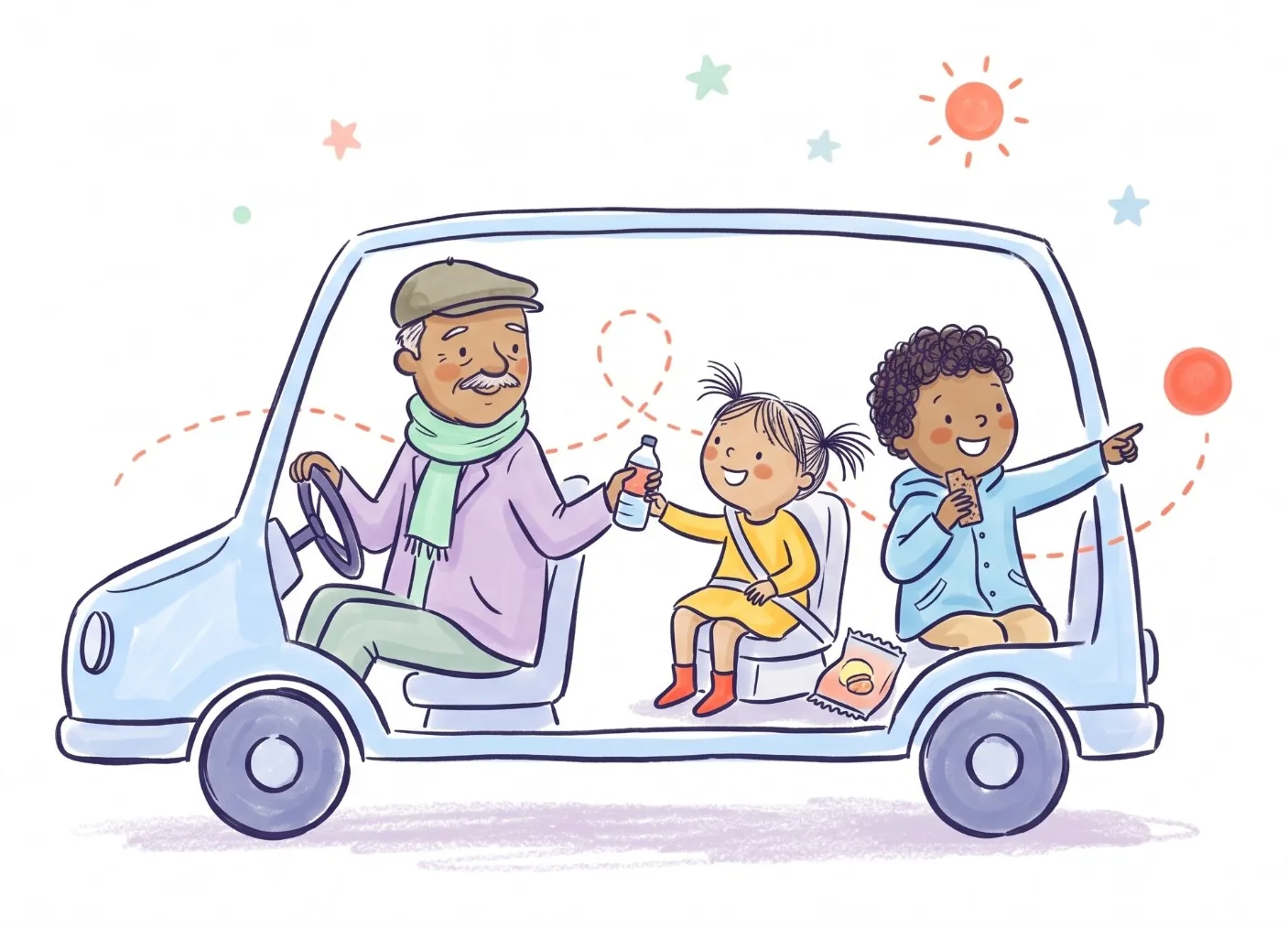
Three minutes out of the school parking lot, someone in the back seat is kicking the seat in front. Not hard yet. Just steady, the way it goes before one of them starts yelling and the other starts crying.
You can deal with it in about four minutes, once everyone is shouting. Or you can deal with it now, in about ten seconds, by giving the feet something else to do. That second option is redirection.
What redirecting a child's behaviour means
Redirection means steering a child from what they're doing towards something they're allowed to do, early, before it turns into a bigger problem. It isn't a punishment and it isn't a lecture. It's a change of direction.
The American Academy of Pediatrics puts it plainly: sometimes children misbehave because they're bored or don't know any better, so find them something else to do (HealthyChildren.org). Raising Children Network, the Australian parenting site, adds the part that matters most: redirect before your child gets frustrated, bored or cranky, or when you see the first signs of it (Raising Children).
Timing is the whole thing. Redirection works on the seat-kicking. It doesn't work on the screaming that comes ten minutes later.
Why the drive home is the hardest stretch of the day
A lot of children use up everything they have holding it together at school, then let go with the first safe person they see. The Child Mind Institute describes it simply: coming home starving, after struggling all day to keep it together, is a good recipe for an afternoon meltdown (Child Mind Institute). Its advice for that stretch is a snack and some downtime, and it says it's fine to ease off on demands for a while if your child needs the break.
So before you redirect anything, check the basics. A hungry, tired child doesn't need a clever distraction. They need food. The AAP's tantrum advice says the same thing: if tantrums peak when your child is hungry, keep a healthy snack with you when you're out (HealthyChildren.org). A granola bar in the glove box does more than any technique in this post.
What it sounds like
Most redirection comes down to telling a child what they can do instead of what they can't. Parent-child interaction therapy, a coaching approach for families of young children, teaches parents to phrase instructions around what the child should do, rather than what not to do, because it shows the child what's expected (Virginia Cooperative Extension).
| Instead of | Try |
|---|---|
| "Stop kicking the seat!" | "Feet on the floor. Can you push them down as hard as you can?" |
| "Quit poking your brother." | "Hands in your lap, or you can hold the water bottle for me." |
| "Stop whining about the iPad." | "No iPad in the car. Want to pick the next song?" |
| "Don't run in the parking lot!" | "Hold the side of the car with me till we're at the door." |
| "Stop yelling." | "Use your car voice. Tell me the best thing about lunch." |
| "Put that down, it's not a toy." | "That's Dad's. Here, you can have the keys to hold." |
A few things make it work better:
- Keep it short. One instruction, then the new thing to do.
- Make the new thing real. "Look out the window" rarely works. "Count the red cars until we get home" sometimes does.
- Give their hands or feet a job. A wiggly child often needs a job for their hands or feet: hold the water bottle, press the floor, carry the lunchbox.
- Change the scene if you can. The AAP's list for heading off tantrums includes moving to a new room or offering a safer toy. In the car, that might be swapping seats on the next trip.
Give them warning before the switch
A lot of afternoon trouble happens at a handover: leaving the playground, getting into the car, turning off the screen at home. The Child Mind Institute suggests a 10-minute warning before a transition like dinner or homework, then a reminder at 2 minutes (Child Mind Institute). The AAP says the same in its own words: plan ahead for the situations where your child tends to struggle.
At pickup, that might sound like "Five more minutes on the slide, then we're walking to the car," and then, at the car, giving them the one thing they get to choose: the snack, the song, or which door they climb in.
When redirection is the wrong move
It's a good tool for the start of a problem and a poor one for the middle.
- During a full meltdown. Raising Children warns that trying to redirect a child who is very upset can send the message that their strong feelings don't matter. Once they're past the point of listening, stay close, keep them safe and help them calm down first.
- When it becomes the reward. If yelling reliably gets a fun new activity, some children learn to yell for one, which Raising Children also points out. Redirect to something ordinary, not a treat.
- For behaviour you'd rather ignore. Whining for attention often fades faster with planned ignoring than with a fresh distraction every time.
- When they need to finish the task. If the job is getting into the car seat, steering them to something else means the car seat doesn't happen. That's where two choices ("climb in yourself or I'll lift you") or a when-then ("when you're buckled, you can have the snack") work better.
Is redirection the same as distraction?
They overlap. Distraction pulls a child's attention away from something, which works well with toddlers. Redirection goes a step further and points them at what to do instead, which matters more as children get older. "Look, a dog!" is distraction. "Feet on the floor, and you can tell me if you see a dog" is redirection.
Older children see straight through a pure distraction, and that's fine. For a ten-year-old, redirection is less "look over there" and more "you can't have the phone in the car, but you can choose dinner."
The same words from every driver
Redirection works best when the child hears the same thing from whoever does pickup. If you've worked out that your son needs a snack the second he gets in the car, Grandma needs to know that before Thursday. Same for the sitter, who might otherwise spend the drive fighting a battle you've already solved.
In Kid Pickup, the family chat includes everyone you've invited, so one message reaches all of them: "Snack first, questions about the day later. If he starts kicking the seat, give him the water bottle to hold." Each pickup shows whose it is, so you know who'll be in the car that afternoon, and the family gets a notification when the pickup's done. Kid Pickup is free for two weeks on iPhone for new subscribers, and grandparents and sitters don't pay.
FAQ
What is redirection in parenting?
Redirection means steering a child away from a behaviour and towards something they're allowed to do, early, before it grows. "Feet on the floor, push them down hard" instead of "stop kicking the seat" is an example. It works best at the first sign of trouble, not in the middle of a meltdown.
How do you redirect a toddler's behaviour?
Step in at the first sign, keep it short, and give them something specific to do instead: hold this, carry that, count the red cars. Moving to a new room or offering a safer toy also works. Check first whether they're hungry or tired, because that needs food or rest, not a new activity.
When should you not use redirection?
Not during a full meltdown, when it can feel to a child as if their feelings don't matter. Not if it starts to work as a reward for bad behaviour. And not when the point is to get a task done, like buckling up, where a when-then or two choices works better.
Why does my child melt down after school?
Many children use up a lot of effort holding it together at school and let go once they're with someone they feel safe with. Hunger and tiredness make it worse. The Child Mind Institute suggests a snack and some downtime first, with fewer demands for a while after school.
Is redirection the same as distraction?
Not quite. Distraction takes a child's attention off something; redirection also tells them what to do instead. Distraction works well for toddlers. Redirection matters more as children get older and start to see through a simple distraction.