
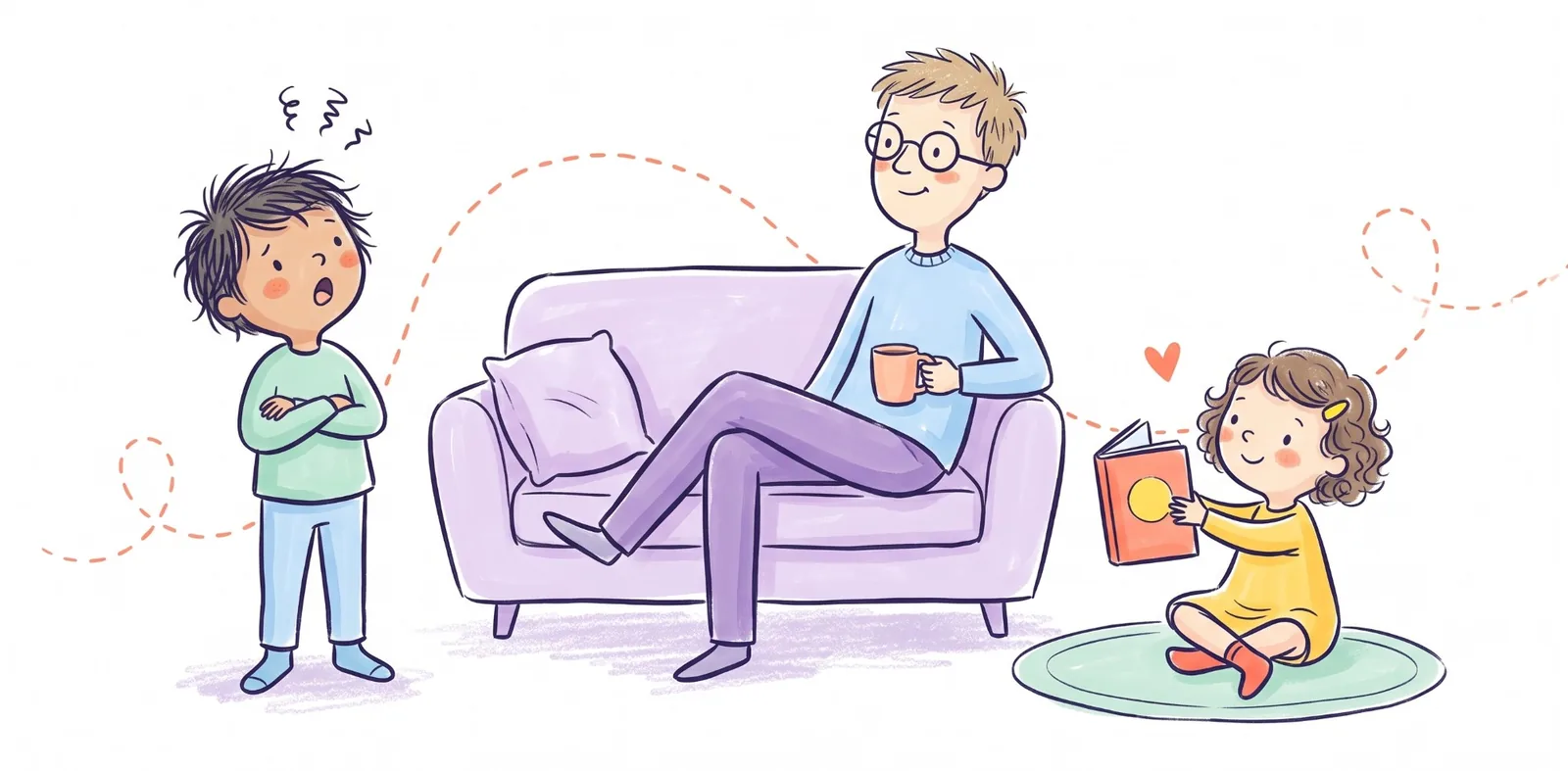
"Can we go to the park? Can we? Mom. Mom. Can we go to the park?"
It's the fourth time since you buckled them in, and you've already said no three different ways. Each answer seems to make the next ask louder.
That's because, to a small child, an answer is a reward. Even "I said no!" is attention, and attention is one of the things children want most. Planned ignoring is the idea of deliberately not paying for the behaviour you'd like to see less of, and paying generously for the behaviour you'd like to see more of. Used on the right behaviour, it's one of the quietest tools a parent has. Used on the wrong one, it can make things worse. Here's how to tell the difference.
What planned ignoring is (and isn't)
Planned ignoring means you stop reacting to a small, harmless behaviour while it's happening: no talking, no eye contact, no sighing, no "stop that". The moment the behaviour stops, you come straight back with your full attention.
It is not ignoring your child. The CDC's parenting guidance is careful about this: redirecting your attention means pulling it away from the behaviour, and it shouldn't be mistaken for neglecting the child (CDC, Tips for Redirecting Your Attention). You're still there, still keeping them safe, still ready the second they're ready.
Why it works
What happens straight after a behaviour shapes whether it happens again. If whining reliably gets a reaction, whining is worth doing. If it reliably gets nothing, and asking nicely reliably gets a warm answer, the maths changes.
The CDC says redirecting attention usually works best for minor behaviours like whining or interrupting. Nationwide Children's Hospital describes the same thing as not paying attention to a problem behaviour so that it happens less over time, and says to use it only for behaviour that's unwanted but harmless (Nationwide Children's).
What to ignore, and what never to
| Usually fine to ignore | Never ignore |
|---|---|
| Whining | Hitting, kicking or biting |
| Interrupting | Anything that could hurt them or someone else |
| Fake crying or a sulk | Breaking things |
| Repeating a question you've already answered | Running toward a road or through a parking lot |
| Silly noises at the table | A child who's hungry, tired, sick or truly upset |
The right-hand column comes straight from the guidance. The CDC says dangerous and destructive behaviour should never be ignored, and that ignoring isn't for a child whose need is real, like hunger, tiredness or illness. Nationwide Children's says not to use it for harmful behaviour such as hitting or biting. Those moments need you to step in, calmly and straight away.
How to do it
1. Pick one behaviour
Start with one, like whining for snacks. Trying to ignore everything at once is exhausting, and it's hard to be consistent about five things.
2. Let them know once, when everyone's calm
"When you whine, I'm not going to answer. When you ask in your normal voice, I'll listen." Say it once, at a calm moment, not in the middle of the whining. After that, your actions do the explaining.
3. Go quiet, every time
When it starts, stop responding the way you usually would. No talking, no eye contact, no "I'm ignoring you". Look out the window, keep driving, carry on with the dishes. The CDC's steps are simple: don't touch, talk to or look at your child during the behaviour, keep them safe, and do it every time it happens.
4. Come back the moment it stops
This is the half most people forget, and it's the half that makes it work. As soon as the whining stops, turn back to them warmly. The CDC says to return your attention quickly and praise the behaviour you want, because ignoring on its own doesn't tell a child what to do instead.
5. Name what they did right
"Thanks for asking in your normal voice. Let's talk about the park." The CDC's guidance on praise says specific words work better than "Good job!" because they show the child exactly what to do again (CDC, Tips for Using Praise and Rewards). The answer to the park might still be no. They still get your attention for asking well.
It gets worse before it gets better
Expect this, because it's where most parents give up. When whining stops working, many children try harder: louder, longer, more dramatic. Both the CDC and Nationwide Children's warn that the behaviour may get worse when you first start.
That spike usually means it's working. The child is checking whether the old rules still apply. If you give in at the loudest moment, they learn something you didn't mean to teach: whining works, it just takes more of it. Hold steady through the spike, and come back the moment it ends.
When ignoring is the wrong tool
- When they need something. A hungry, overtired or sick child isn't being difficult on purpose. Meet the need first.
- When they're trying to get out of something. If a child is whining to avoid putting their shoes on, going quiet and walking away gives them exactly what they wanted: no shoes. Behaviour researchers point out that turning away can backfire when a child is trying to escape a task (Lloveras et al., Perspectives on Behavior Science, 2023). Stay with the task and use two choices or a clear first ask instead.
- When it's not working for your child. It doesn't suit every child. In a 1973 study, mothers trained to ignore problem behaviour and praise good behaviour saw problems get worse, not better, for four of six young children (Sajwaj et al., Journal of Applied Behavior Analysis). If a behaviour is still getting worse after a couple of weeks of steady, consistent ignoring, stop and talk to your child's doctor.
And when ignoring is hard because you're about to snap, that's a different problem with its own fixes. We wrote about it in three things to tell yourself before you react.
It only works if everyone does it
Here's the catch most families run into. You ignore the whining all week. Then Grandma picks them up on Thursday, the whining starts in her car, and she answers it, because of course she does. She doesn't know there's a plan.
The CDC calls this out directly: everybody who looks after the child, including grandparents and babysitters, should respond the same way, and if one person keeps answering the behaviour, ignoring may take longer to work or not work at all.
That means telling the people who do the pickups, not just the person you share a house with.
Get everyone on the same plan
In Kid Pickup, the grown-ups who look after your kids are in one place:
- The family chat includes everyone you invite: the other parent, Grandma, the sitter. One message ("We're not answering whining this week. Ask her to use her normal voice, then say yes or no") reaches them all, on every plan.
- Every pickup has one name on it, so you know who'll be in the car with them on Thursday and who needs to hear the plan.
- When the pickup is done, the family gets a notification, so you know they're on their way home.
The same rule that works for kids works for grown-ups: notice what's going right. When Grandma gets it right, say so. Kid Pickup is on iPhone with a 14-day free trial, and grandparents and sitters never pay.
FAQ
What is planned ignoring?
Planned ignoring means deliberately not reacting to a small, harmless behaviour like whining or interrupting while it's happening, then giving your child warm attention the moment it stops. You ignore the behaviour, never the child, and you keep them safe the whole time.
What behaviours should you never ignore?
Never ignore anything dangerous or destructive, like hitting, biting, running toward a road or breaking things. Don't ignore a child who is hungry, tired, sick or genuinely upset either. Those need you to step in.
Why does my child's behaviour get worse when I ignore it?
When whining stops getting a reaction, many children try harder before they give up. Both the CDC and Nationwide Children's Hospital warn to expect this. If you give in at that point, the child learns that louder works, so hold steady and come back as soon as it stops.
How long does planned ignoring take to work?
It varies with the child and the behaviour, and it depends heavily on consistency. If a behaviour is still getting worse after a couple of weeks of steady ignoring by everyone who looks after your child, stop and talk to your child's doctor.
Should grandparents and babysitters ignore the behaviour too?
Yes. The CDC says everyone who cares for the child should respond the same way. If one adult keeps answering the whining, it can take longer to fade or not fade at all.