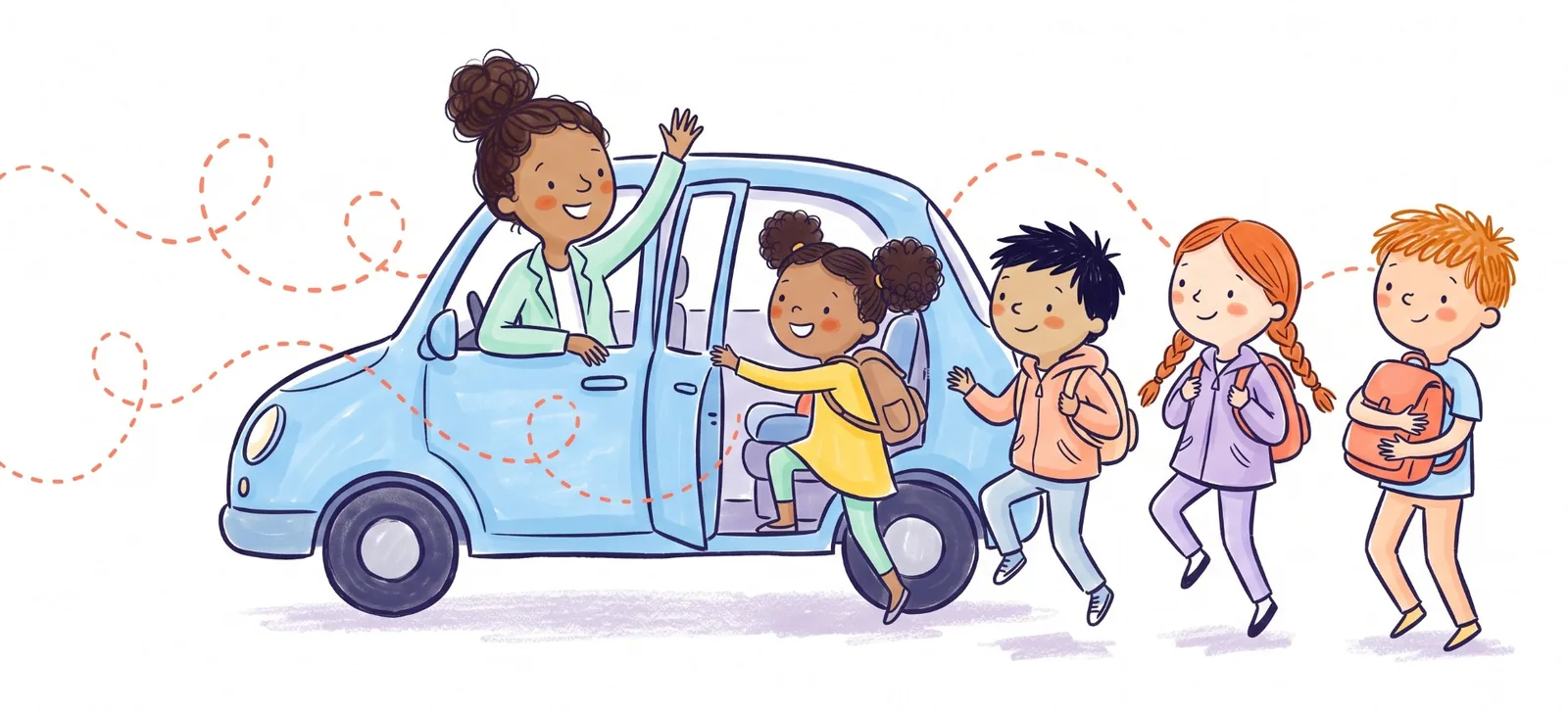
It's minus eight, you're late, and your three-year-old is zipped into a coat the size of a duvet. Taking it off in a cold car to buckle her in feels ridiculous. You know the rule anyway, so you do it.
Then Thursday comes, Grandpa does the pickup, and nobody has told him.
This post covers the rule, how strong the evidence behind it is, what to do when it's properly cold, and what to say to everyone else who drives your child.
The rule in one line
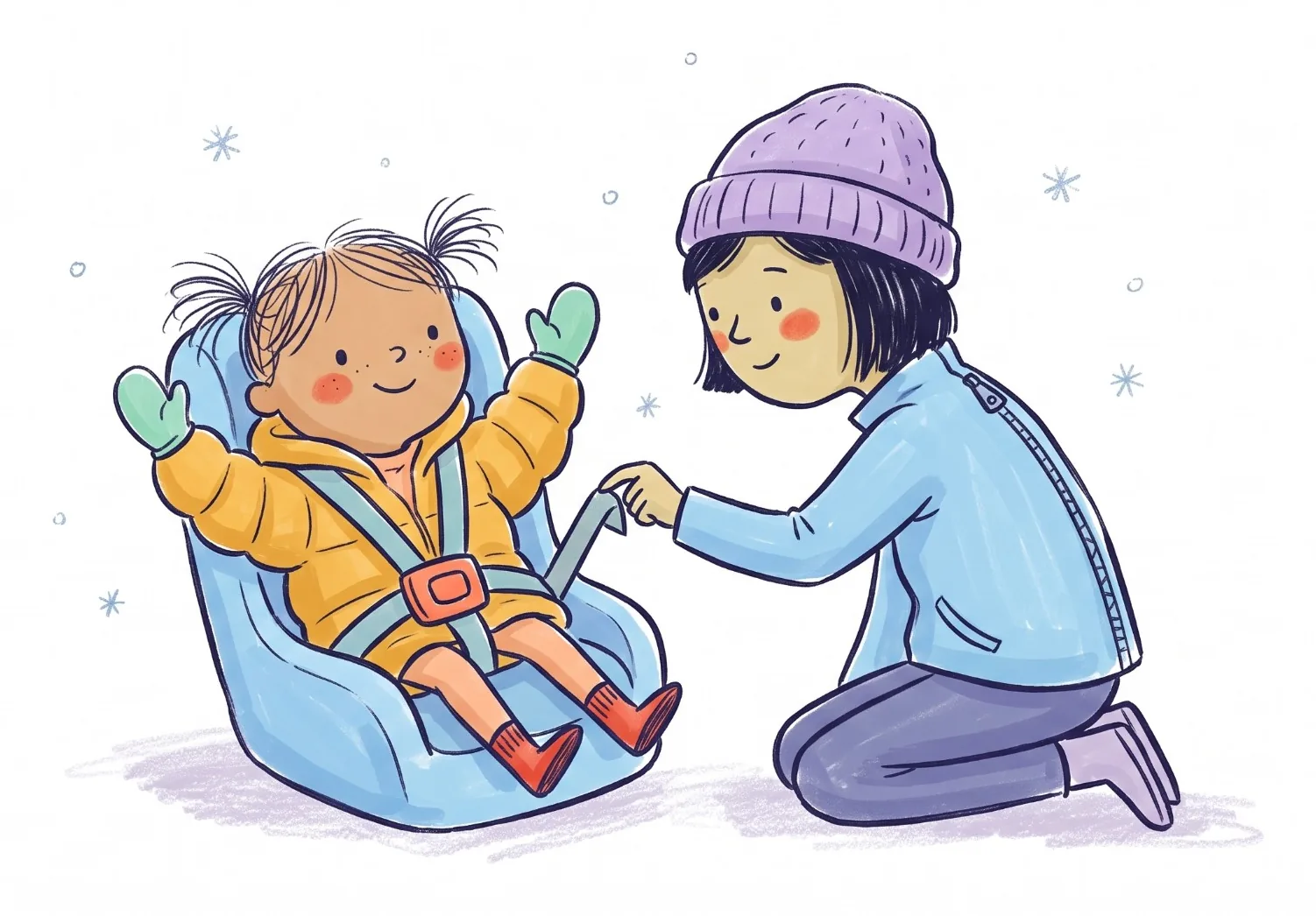
Nothing bulky goes between your child and the harness. Buckle them in thin layers, tighten the straps, then put the warm things on top.
The US road safety agency, NHTSA, explains why: "too much bulk can create extra room in the harness causing a loose fit, and putting the child at risk for injury in the event of a crash." Its fix is to "Choose lightweight fleece layers instead of puffy materials," and "For added warmth, cover your child with a blanket, or put a coat on backwards over the properly fitted harness" (NHTSA).
Child Safety Link, the injury prevention program at the IWK children's hospital in Halifax, says the same in friendlier words: "Remember, kids can wear a coat or jacket in the car – just not a bulky or puffy one" (Child Safety Link).
How to tell if a coat is too thick
Use the pinch test. Buckle your child in wearing the coat and tighten the harness until you can't pinch any strap between your fingers at the shoulder. Unbuckle without loosening anything, take the coat off, and buckle again. If you can pinch the strap now, the coat is too thick.
Britax, which makes car seats, puts it the other way round: "If the harness passes the pinch test without the coat, then the coat is acceptable" (Britax). Some thin down jackets pass. Most ski jackets and snowsuits don't.
How good is the evidence?
It's weaker than the confident posts on social media suggest, and you should know that before you lecture your father-in-law.
We looked for a published study that measures what a winter coat does in a harnessed seat, and didn't find one. What exists is this:
- A TV demonstration. In 2015, NBC's TODAY show filmed a test where "a child dummy that appeared to be securely strapped into a car seat came hurtling out of it in a simulated 30-mph crash" (TODAY). That was one dummy and one coat, and no data was published.
- A sled test in Germany. The motoring club ADAC stopped a sled from 16 km/h, about 10 mph, with an adult dummy and a child dummy in thick winter clothing. On both, the lap belt cut deep into the abdomen (ADAC). That test is about seat belts riding up, not about harnesses.
- The engineers' reasoning. Consumer Reports' auto safety manager told NPR that "those layers and that puffiness will compress during a crash, and it introduces additional slack in the child's harness system" (NPR).
- The people who make the seats. This is the part that settles it for us. Graco's manual says, "Do not put snowsuits or bulky garments on your child when placing them in the car seat" (Graco). Britax says, "No, we do not allow children to wear bulky winter coats or jackets while secured in a car seat" (Britax). Chicco's manual says heavy clothing "can prevent harness from being properly tightened around child" (Chicco).
You'll also see the claim that a puffy coat adds four inches of slack. Children's Wisconsin says "up to four inches" on a teaching sheet, with no measurement behind it that we could find (Children's Wisconsin). The pinch test on your own child's coat tells you more.
So the rule doesn't rest on a pile of studies. It rests on how padding behaves when it's squeezed, on a couple of demonstrations, and on the instructions that came with your seat. That's enough for us, and the fix costs thirty seconds.
Is it against the law?
No law we found mentions coats. We read child restraint statutes in Washington, Minnesota and Ontario, and none names clothing. We didn't check every state and province.
What the laws do say is that the seat has to be used the way its maker says. Minnesota defines "properly restrained" as "restrained or secured according to the instructions of both the motor vehicle manufacturer and the child passenger restraint system manufacturer" (Minnesota Statutes 169.685). Washington's wording is similar (RCW 46.61.687). And the makers say no bulky coats.
Whether that adds up to a ticket, nobody official has said, and we found no report of one. Don't tell Grandpa it's illegal. Tell him it's what the seat's instructions say.
If you're in Canada
Transport Canada words it differently from everyone else, and Canadian parents notice. Its notice on add-on products says: "When using bulky winter clothing ensure that the harness system is tight, compressing the material to ensure a snug fit." In the same paragraph it says, "Child seat manufacturers state in their instructions not to use bulky clothing," and tells you to "Check with the car seat manufacturer for alternative methods of clothing during the winter" (Transport Canada).
Those fit together better than they look. If a snowsuit truly has to stay on, squash it flat under the straps. If it doesn't, follow the manual and take it off. Parachute, Canada's injury prevention charity, gives the version that works on an ordinary school morning: "In cold weather, dress children in clothing appropriate for spring or autumn in the car seat, such as an undershirt, hat and fleece layer" (Parachute).
Parachute has a line for hockey families too: "Bulky sports equipment, such as shoulder pads and hockey pants, can also interfere with proper car seat, booster seat or seat belt fit."
What to do when it's really cold
- Coat on for the walk to the car. Nobody is asking you to carry a child across a car park in a T-shirt.
- Coat off at the car door, then buckle and tighten.
- Coat on backwards, arms through the sleeves, over the harness. Or a blanket over the top. Chicco's manual: "To keep child warm, place a blanket over child and restraint AFTER you have properly secured child in harness."
- Hat, mitts and boots stay on. They don't touch the harness.
- Take a layer off once the car warms up, especially for babies, who overheat quickly.
Warming the car first helps a lot. Do it outside. The CDC's rule is "Never run your car or truck inside a garage that is attached to a house, even with the garage door open" (CDC). And don't leave your child in the car while it warms up or while you scrape the windscreen.
Babies in infant carriers
The easy way is to buckle the baby indoors. Britax: "secure them in the seat before leaving the house. Then, place a coat or blanket over top of their car seat harness." Keep the carrier inside between trips so it isn't ice cold.
Covers come in two kinds:
- A cover that stretches over the top like a shower cap, with nothing behind the baby, doesn't touch the harness. Child Safety Link adds that "some car seat companies still recommend you remove a shower cap style cover when the seat is in use in the car," so check your manual. Keep the baby's face uncovered.
- A bunting bag or padded liner that goes behind the baby is a different thing. Parachute: "Do not use a “cuddle bag” or other bunting or sleeping bag that would go behind the child in the car seat."
Boosters, and your own coat
A child in a booster is held by the car's seat belt, so nothing needs to come off. What matters is where the lap belt sits. Child Safety Link: "With a bulky coat or snowsuit under the belt, the lap belt could slide up on the soft belly."
Transport Canada's fix: "If your child is wearing bulky winter clothing, try to thread the lap belt underneath the jacket so that the lap belt is tight on the hips" (Transport Canada). Unzip the coat, lift the hem, and put the belt low across the hips underneath it.
Do the same with your own. Nationwide Children's Hospital's advice for the adult driving is "Lift the bottom of your coat so the lap belt is close to your hips" (Nationwide Children's).
What to tell whoever else is driving
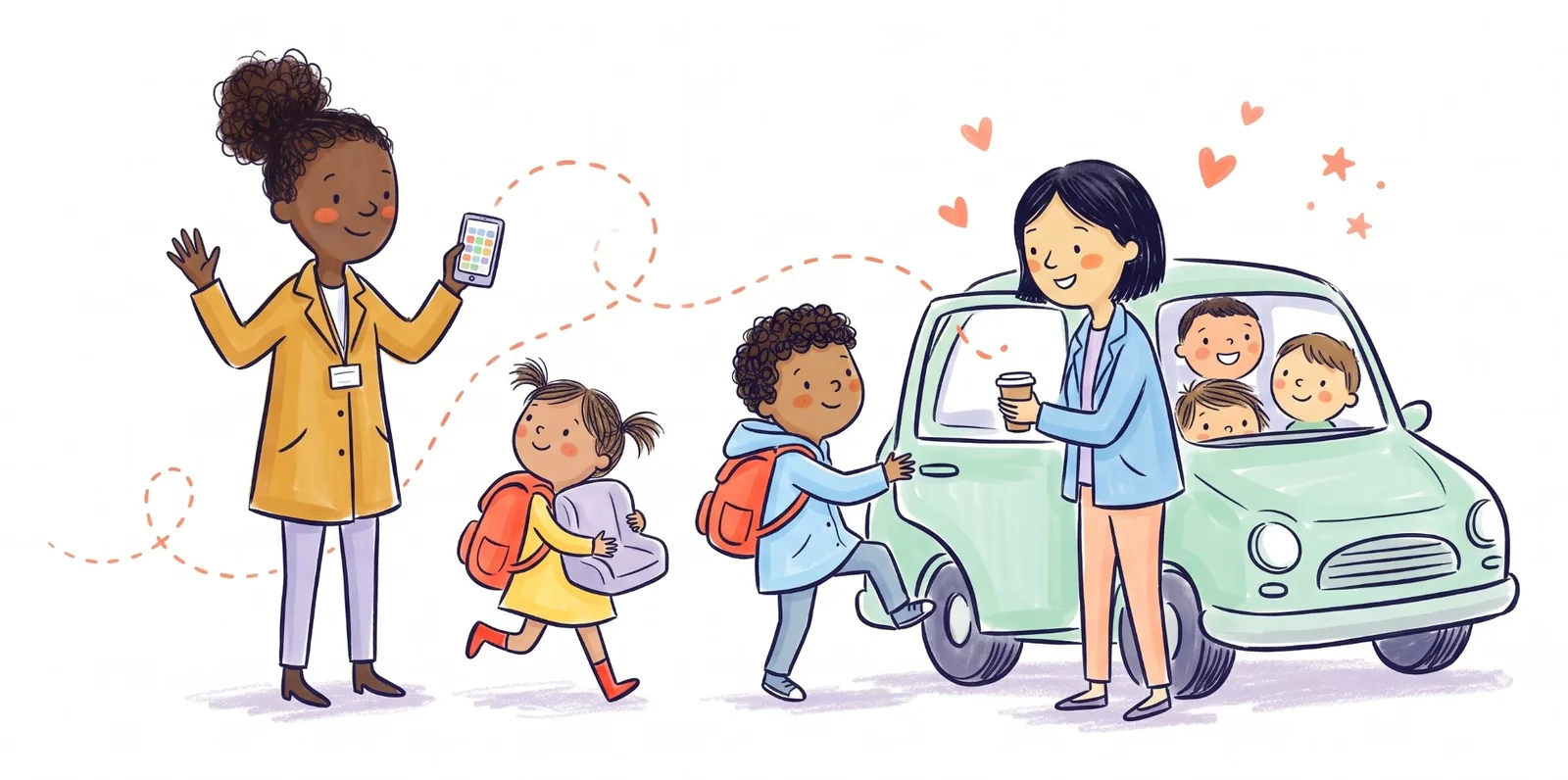
Most posts on this stop at the parent. But the day it goes wrong is the day someone else drives, means well, and hasn't heard any of it. Even Britax says so: "If grandparents, a babysitter, or another family friend is responsible for pickup, take time to review best practices for winter car seat safety with them."
Three things make it stick.
Show them once. Do the pinch test with them in the driveway, with the real coat. Seeing two fingers of slack appear convinces people who'd argue with an article.
Give them the short version in writing. Something like:
Coat off before she's buckled, then on backwards over the straps. Straps tight enough that you can't pinch them. There's a blanket in the seat pocket. It's what the seat's instructions say, not me being fussy.
Make it easy in their car. Leave a blanket and a fleece with the seat. If the seat lives in their car, adjust the harness for your child in a sweater, so a coat won't fit under it anyway.
We've written more on the seats themselves in car seat rules when someone else drives your child.
Where the reminder lives
The hard part is that you aren't there at 3:15 to say it. In Kid Pickup, each pickup on the family calendar has one name on it, and the notes you add to a pickup are seen by whoever has taken it. "Coat off before buckling, blanket's in the seat pocket" sits on Thursday's pickup, where Grandpa sees it before he leaves.
FAQ
Can a child wear a winter coat in a car seat?
Not a bulky one under the harness. NHTSA, car seat makers and Canadian safety groups all say to buckle the child in thin layers, tighten the straps, and put the coat on backwards or a blanket over the top.
Why are puffy coats dangerous in car seats?
The padding squashes flat in a crash, which leaves the harness looser than it looked when you tightened it. The evidence is crash-dummy demonstrations and the seat makers' instructions; we found no published study that measures it.
Is it illegal for a child to wear a coat in a car seat?
No law we found mentions coats. Laws in places such as Minnesota and Washington require the seat to be used as the manufacturer instructs, and the manuals say not to use bulky clothing. We found no report of anyone being ticketed for it.
What is the pinch test for car seats?
Tighten the harness with the coat on until you can't pinch the strap at the shoulder. Take the coat off and buckle again without adjusting. If you can pinch the strap now, the coat is too thick to wear under the harness.
How do I keep my child warm in a car seat in winter?
Thin layers such as fleece under the harness, then the coat on backwards or a blanket over the straps, plus hat, mitts and boots. Warm the car first if you can, outside and never in an attached garage.
Can a child wear a coat in a booster seat?
Yes, but the lap belt has to sit low on the hips, not on the belly. Unzip the coat and thread the lap belt underneath it, as Transport Canada suggests.
Are car seat covers safe in winter?
A cover that goes over the top of an infant carrier like a shower cap, with nothing behind the baby, doesn't affect the harness. Bunting bags and liners that go behind the child aren't recommended. Check what your seat's maker allows.