
You open Facebook to see the photo your sister posted of her kids at the pumpkin patch. Before you find it you've scrolled past a stranger's kitchen renovation, a reel from a page you never followed, two ads for strollers and a post from a group you joined for one yard sale in 2019. The pumpkin patch is eleventh.
That isn't your imagination, and it isn't a setting you got wrong. It's how the feed is built now.
Your friends are the minority of your feed
Meta publishes a report every quarter on where the posts in US Facebook feeds come from. In the first quarter of 2026, 39.0% of what people saw in Feed came from "in Feed recommendations", posts from people and pages they had no connection to. Posts from friends were 19.2% (Meta Transparency Center). Strangers outnumbered friends two to one.
Mark Zuckerberg said as much under oath. Testifying in the FTC's antitrust case in April 2025, he described the Facebook feed as having "turned into more of a broad discovery and entertainment space" (Business Insider). The month before, Meta had launched a separate Friends tab, promising "content just from your Facebook friends, no recommended content" (Meta). A tab for your friends, inside the app that used to be nothing but your friends, tells you what the main feed has become.
And there's the money. In its October 2026 results, Meta reported that the number of ads it showed across its apps was up 10% on a year earlier (Meta investor relations). Every one of those ads sits between you and your sister's photo.
None of this is a secret plan. A feed paid for by advertising has to keep you scrolling, and your twelve relatives don't post enough to do that. Strangers do.
If you've already left
A lot of parents have. Pew's 2025 survey found 71% of American adults use Facebook, which leaves nearly three in ten who don't (Pew Research Center). Some never joined. Some deleted it the week their first baby was born, because they didn't want that baby's face in an advertiser's system. Some just got tired.
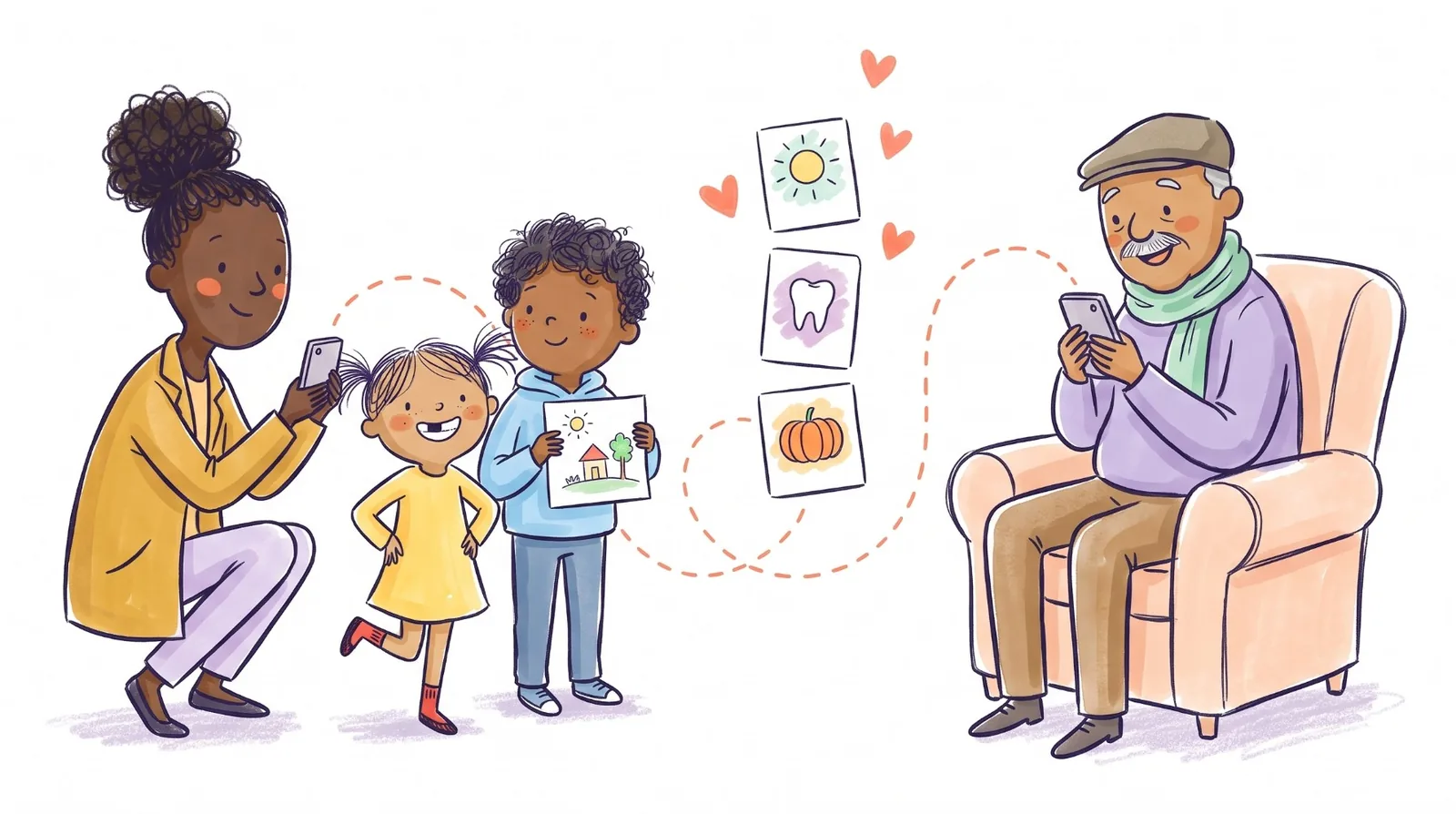
What they usually lose is the part that was actually good: Grandma seeing the first day of school, the cousins seeing the lost tooth, the other parent seeing what happened at swim while they were at work. The usual replacement is a group text, which works until it has fourteen people in it, photos too compressed to keep, and the thread about Saturday's pickup buried under forty reactions to a dog photo.
What a family feed should be, and nothing else
If you're the kind of person who cleared out your apps on purpose, you probably want something short to describe. Ours is:
- Only people you invited. No public profiles, no "people you may know", no way for a post to reach anyone outside the list.
- Newest first. Nothing ranked, nothing recommended, nothing boosted. You read it to the end and you're done.
- No ads. The family pays a subscription; nobody is selling your attention to anyone.
- Photos stripped of where they were taken. A phone photo carries the location it was taken at. Kid Pickup shrinks each photo on your phone before it uploads, and that removes it.
- Deleting that deletes. A deleted post leaves everyone's feed at once and is gone from our servers after 30 days.
Why it lives in a pickup app
Kid Pickup started as a way for a family to settle who's collecting the kids today. The feed came later. The grandparents, the other parent and the sitter were already in the app for the pickups, and they're exactly the people a family wants to share photos with. Nobody else is in there.
So the feed is the first screen. Today's pickups sit at the top with who has each one, and underneath are the posts: the photo from soccer, "running ten minutes late" from Grandma, the drawing a child wanted posted. A parent can post on a child's behalf, with their own name shown underneath. Anyone in the family can react or comment, and you can edit your own post. If the feed gets chatty, it has its own notification switch, so you can quiet it without ever missing a pickup alert. Our family feed page goes through it piece by piece.
For a family trying to have fewer apps, that's one app instead of three: no calendar app, no group chat for pickups, no social network for the photos.
Getting a grandparent in who's never used social media
Some of the people you'd most like to share with are the ones who never signed up for anything. A few things make it easier:
- Send the invitation from the app. It comes from your name, and the people you invite don't pay.
- Sit with them the first time if you can. They'll need to make an account with an email and a password, or sign in with Apple or Google.
- Post something for them to react to that day, so the first thing they see is their grandchild, not an empty screen.
- If they're more comfortable on a computer than a phone, the whole thing works in a web browser at app.kidpickup.com.
What it isn't
It isn't a social network. There's no way to follow anyone, find anyone or be found. Children don't get accounts and never sign in. It won't replace the friends you only keep up with on Instagram, and it isn't meant to. It's for the dozen people who'd drop everything for you.
Kid Pickup is on iPhone and in a browser, free for two weeks for new subscribers.
FAQ
How can I share family photos without social media?
Use a private app where only people you invite can see anything, with nothing ranked or recommended and no ads. Family photo apps do this for photos alone. Kid Pickup puts a private feed next to the family's pickup calendar, so the people who share the school run share the photos too.
Why is my Facebook feed full of people I don't follow?
Because Meta now fills it with recommendations. In early 2026, 39% of what US users saw in their Facebook feed came from accounts they weren't connected to, against 19% from friends, by Meta's own count. Facebook's Friends tab shows only friends' posts, but the main feed doesn't.
Do my parents need social media to see the kids' photos?
No. They need a Kid Pickup account, which you invite them to, and it costs them nothing. They can use it on a phone or on a computer in a web browser, and they'll see only what your family posts.